THE STORY
The one who always recognises her
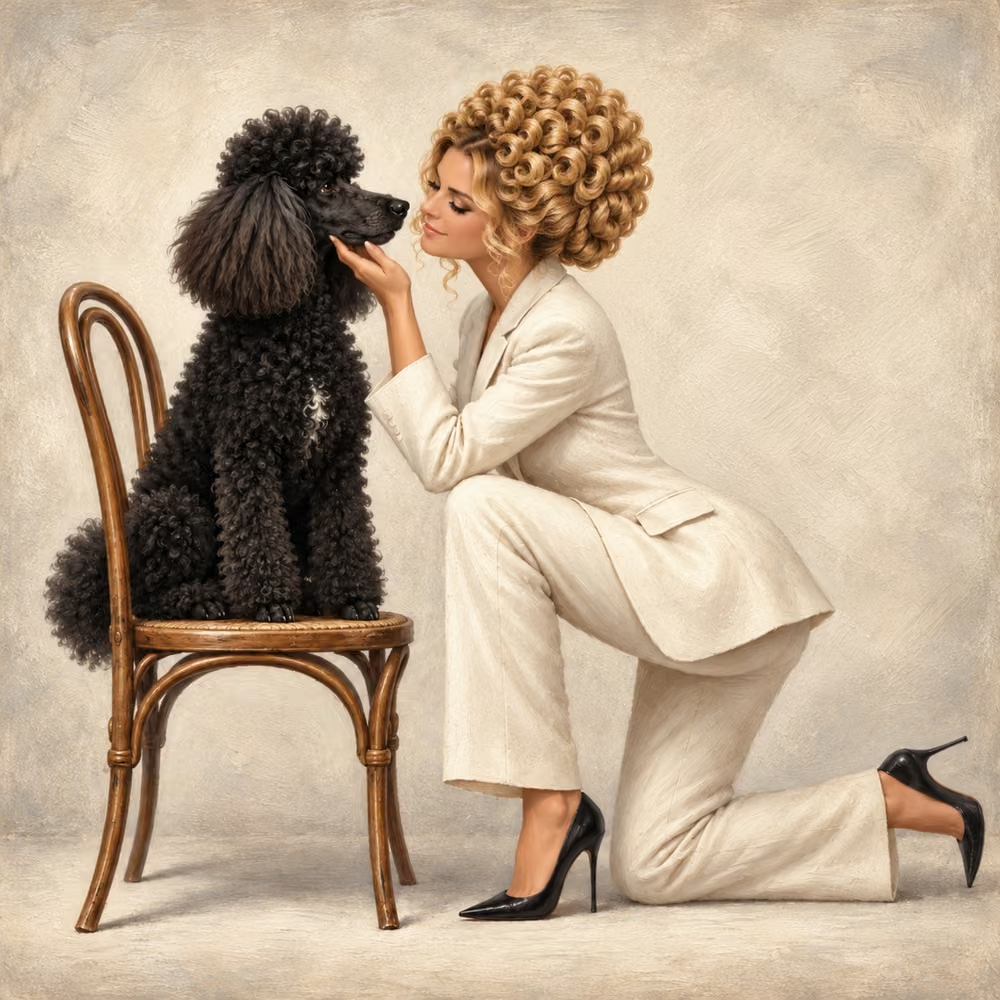
The black poodle had claimed the bentwood chair before the room was ready. He sat perfectly upright, watching the woman kneel beside him in her ivory suit. She placed a hand beneath his chin, and for a moment neither of them moved. Around that small gesture, five different worlds began to unfold.
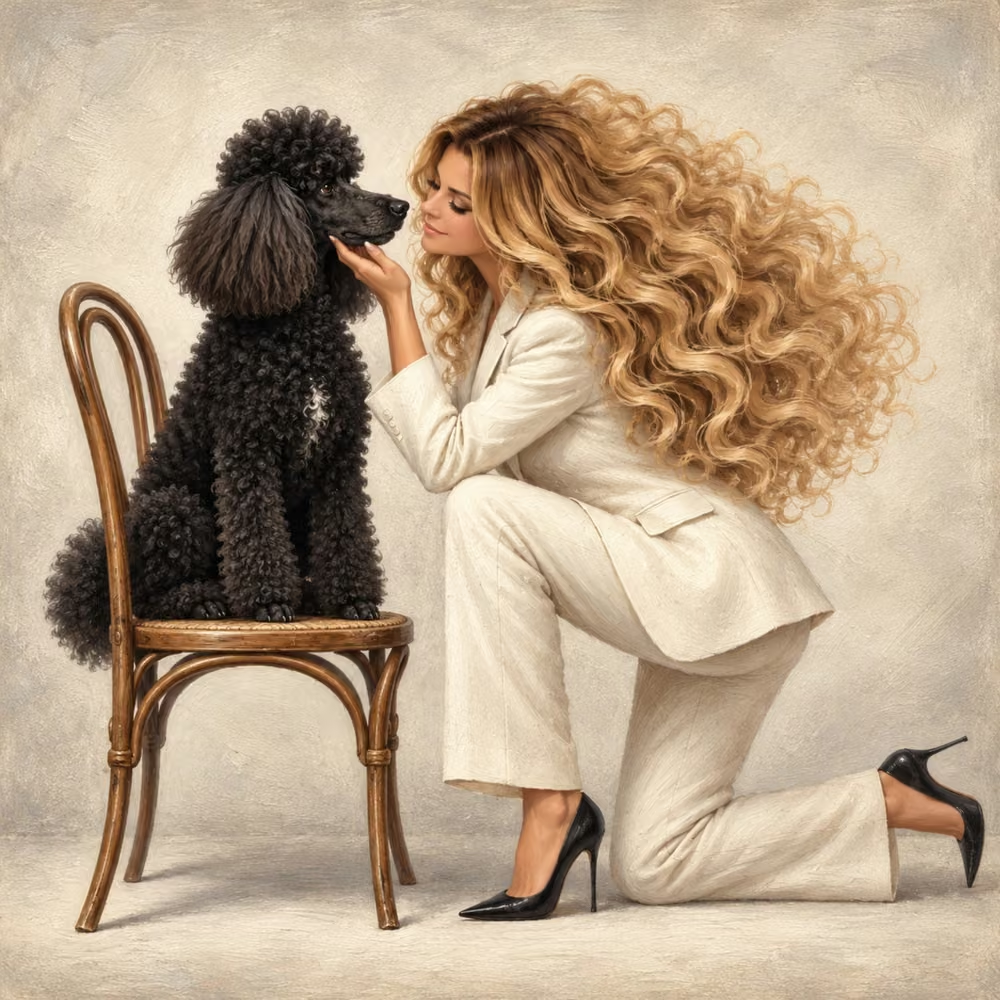
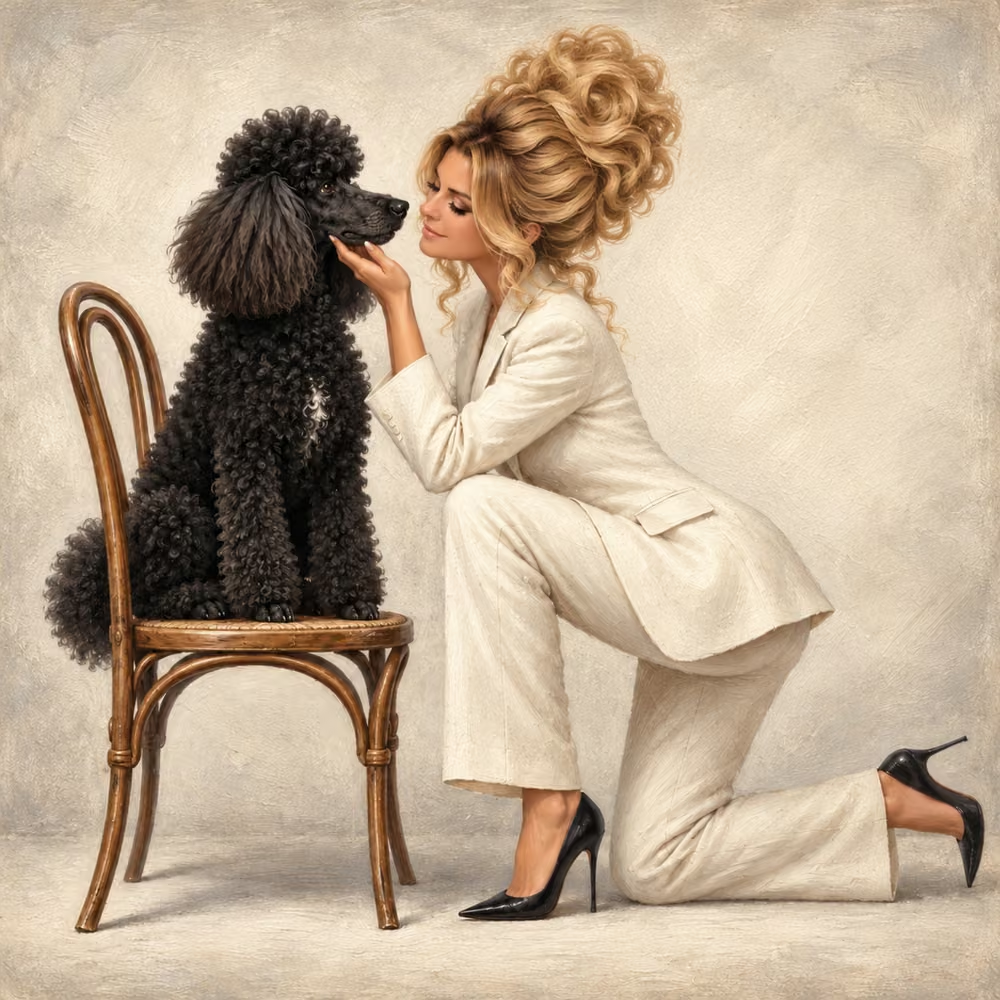
First, her hair fell in long golden waves. It seemed to hold the warmth of an unhurried afternoon. Then the curls rose into a Rococo-inspired crown, as if she had just stepped away from a ballroom. The poodle tipped his head: the crown was impressive, but her hand was exactly where he liked it.
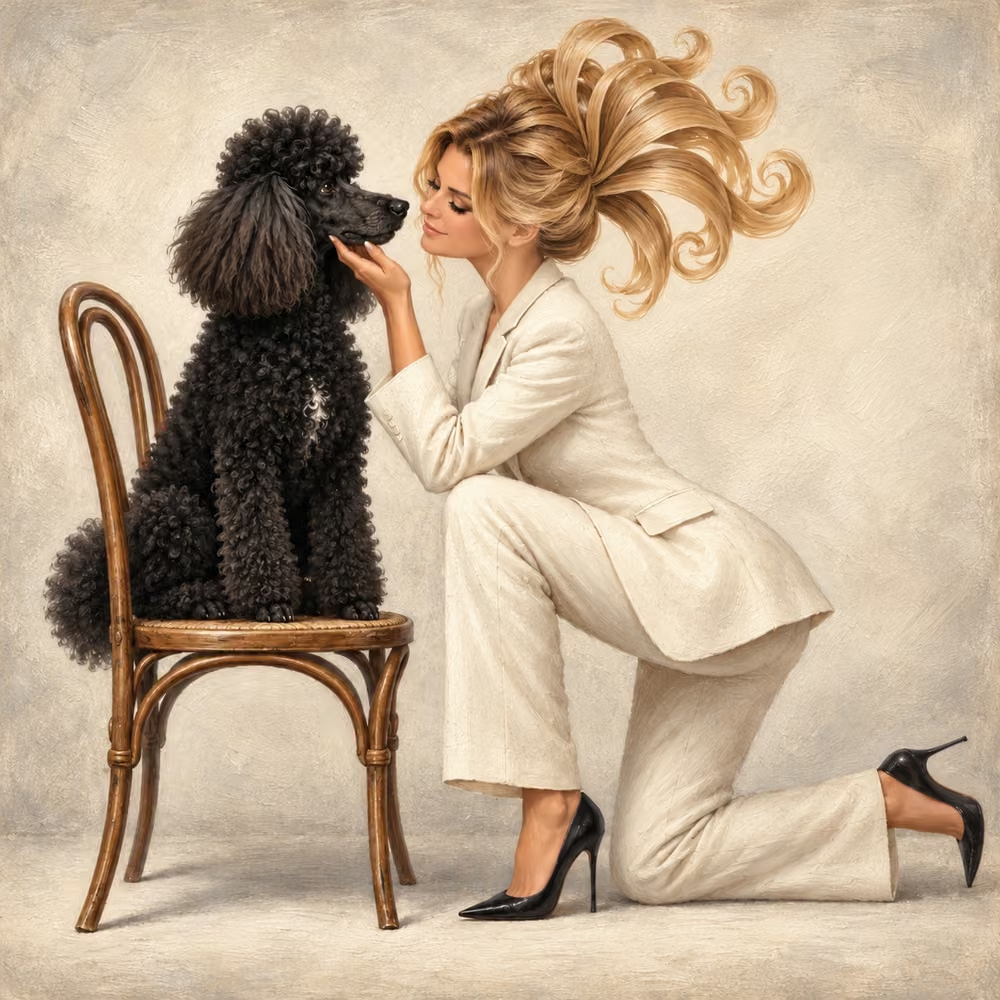
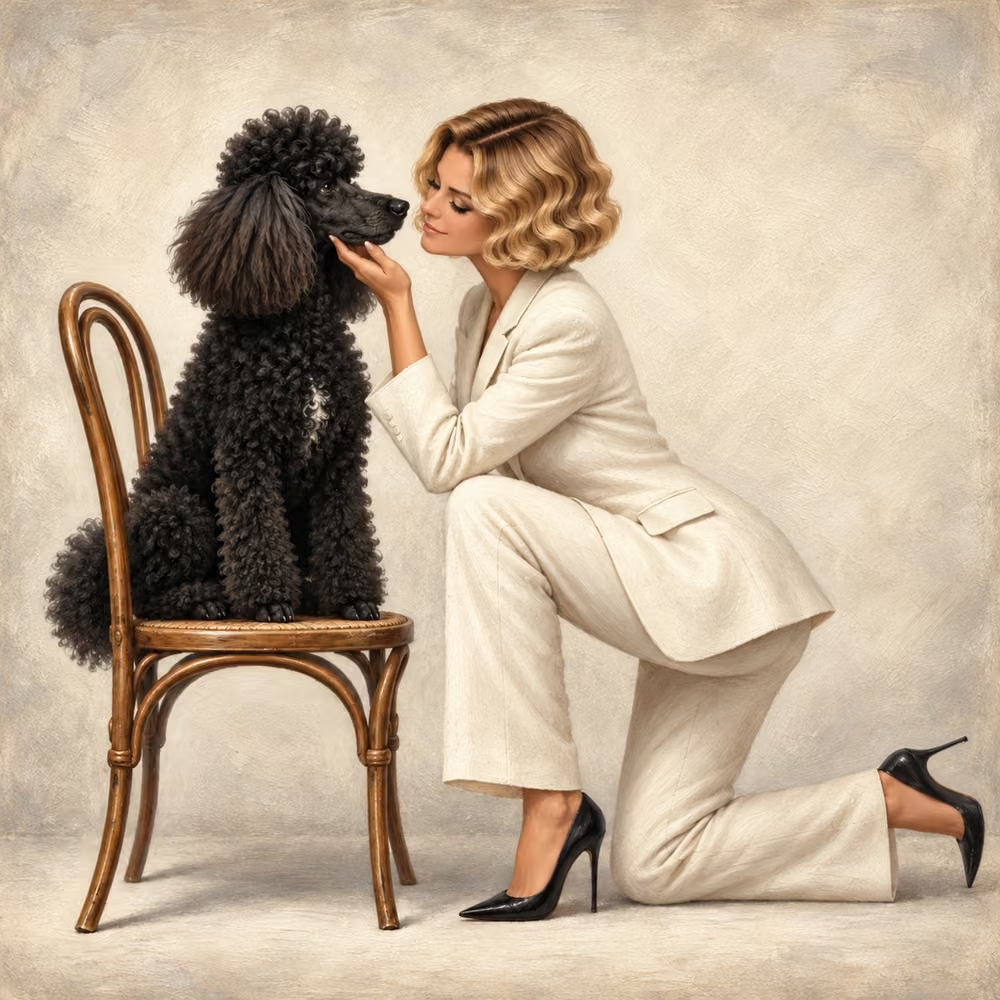
Next came the hair fan. Wide, sculptural loops opened behind her like a flourish on an imaginary catwalk. She almost laughed at the boldness of it. A moment later, short, carefully shaped waves brought the quiet confidence of the 1920s. The room felt smaller, more intimate, like a dressing room just before the music began.
Finally, a close crown of golden curls framed her face, recalling the sculptural rhythm of Roman portraits. Five hairstyles had given her five ways to enter the scene: freely, grandly, playfully, elegantly and with calm assurance. Yet the chair, the ivory suit and the gentle touch had stayed the same.
She leaned a little closer. The poodle rested his chin more heavily in her palm. He had no favourite century and no opinion about fashion. He recognised the person who was there with him. And perhaps that was the thread running through every picture: the freedom to change, and the comfort of being known.
A TÖRTÉNET
Aki mindig felismeri
A fekete uszkár már azelőtt elfoglalta a hajlított fa széket, hogy a szoba elkészült volna. Egyenes háttal ült, és figyelte, ahogy a nő elefántcsontszínű kosztümjében mellé térdel. A nő az álla alá tette a kezét, és egy pillanatra egyikük sem mozdult. E kis gesztus körül aztán öt különböző világ bontakozott ki.
Először hosszú, aranyló hullámokban omlott le a haja. Mintha egy ráérős délután melegét őrizte volna. A fürtök aztán rokokó ihletésű koronába emelkedtek, mintha a nő éppen egy bálteremből lépett volna ki. Az uszkár oldalra billentette a fejét: a korona lenyűgöző volt, de a kéz pontosan ott maradt, ahol szerette.
Ezután következett a hajlegyező. Széles, szoborszerű ívek nyíltak a nő mögött, akár egy képzeletbeli divatbemutató merész gesztusa. Majdnem elnevette magát a látványtól. Egy pillanattal később rövid, gondosan formált hullámok hozták el a húszas évek csendes magabiztosságát. A szoba kisebbnek, bensőségesebbnek tűnt, akár egy öltöző a zene felcsendülése előtt.
Végül tömör, aranyló fürtkorona keretezte az arcát, a római portrék szoborszerű ritmusát idézve. Öt frizura ötféle belépőt adott ugyanabba a jelenetbe: szabadot, fenségeset, játékosat, elegánsat és nyugodtan magabiztosat. A szék, az elefántcsont kosztüm és a gyengéd érintés közben változatlan maradt.
A nő egy kicsit közelebb hajolt. Az uszkár még jobban a tenyerébe engedte az állát. Nem volt kedvenc évszázada, és a divatról sem alkotott véleményt. Azt ismerte fel, aki ott volt vele. Talán ez a szál fut végig minden képen: a változás szabadsága és az ismerősség megnyugtató érzése.